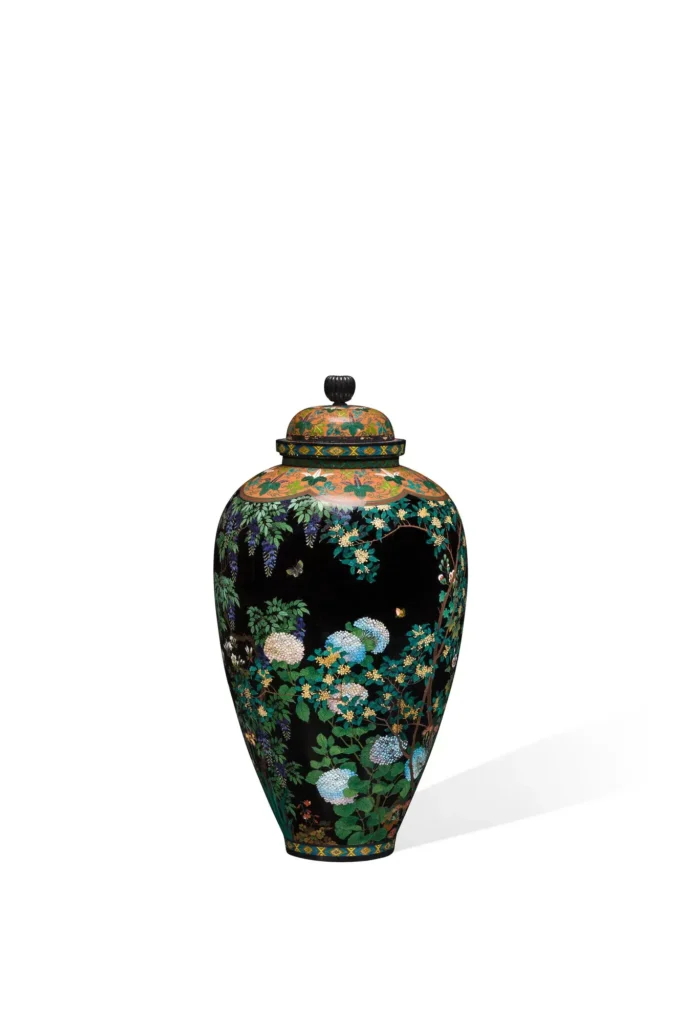
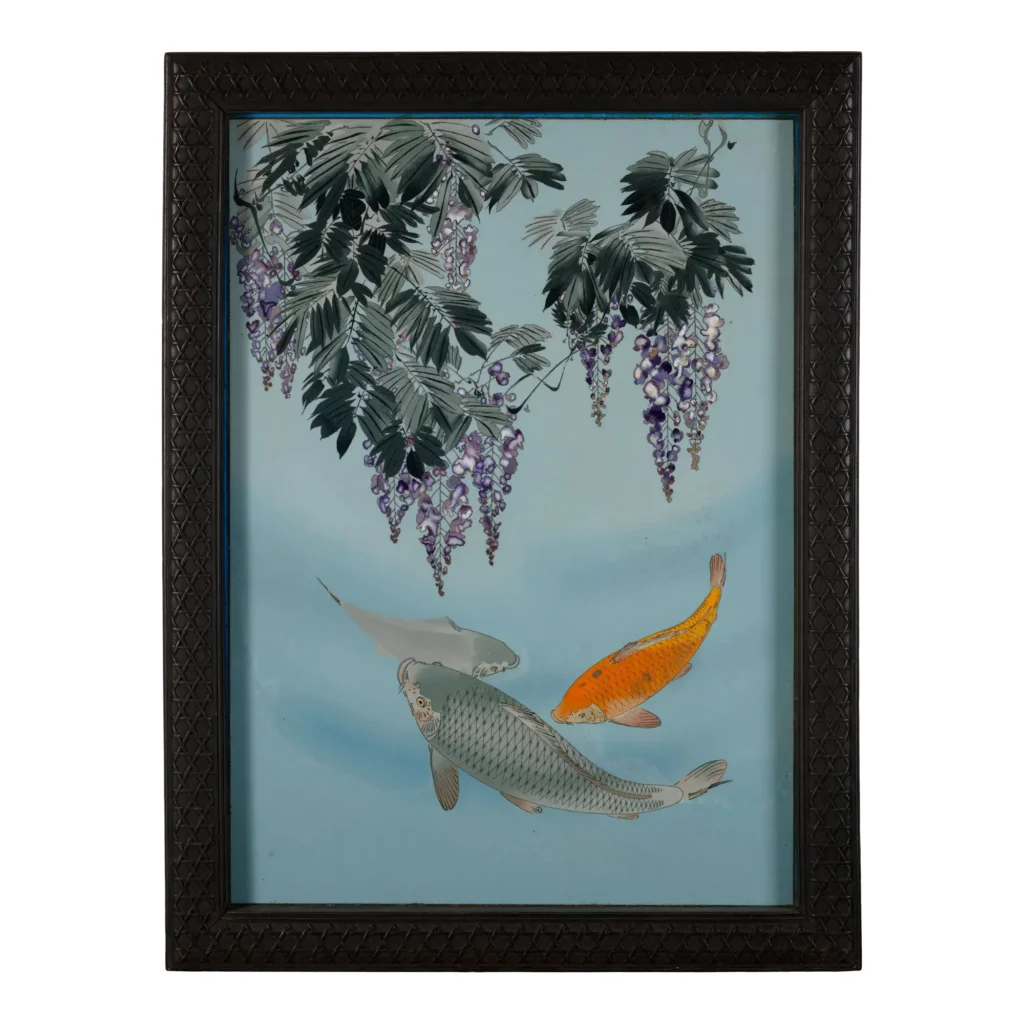
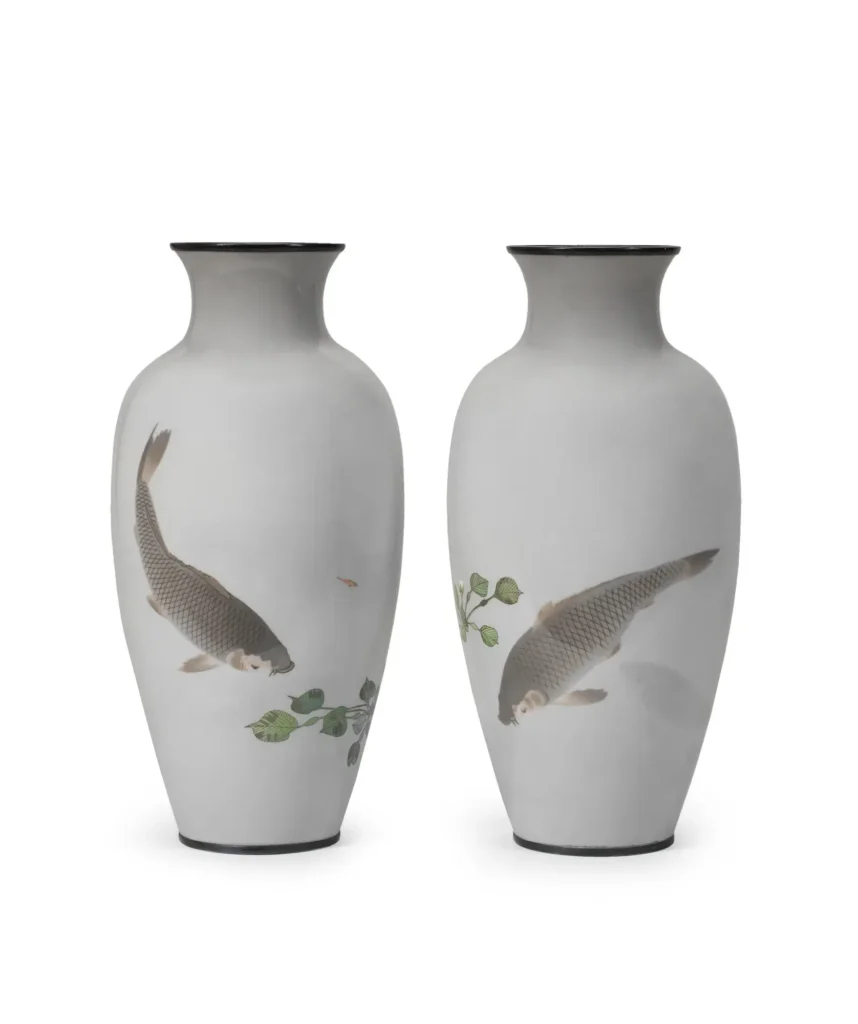
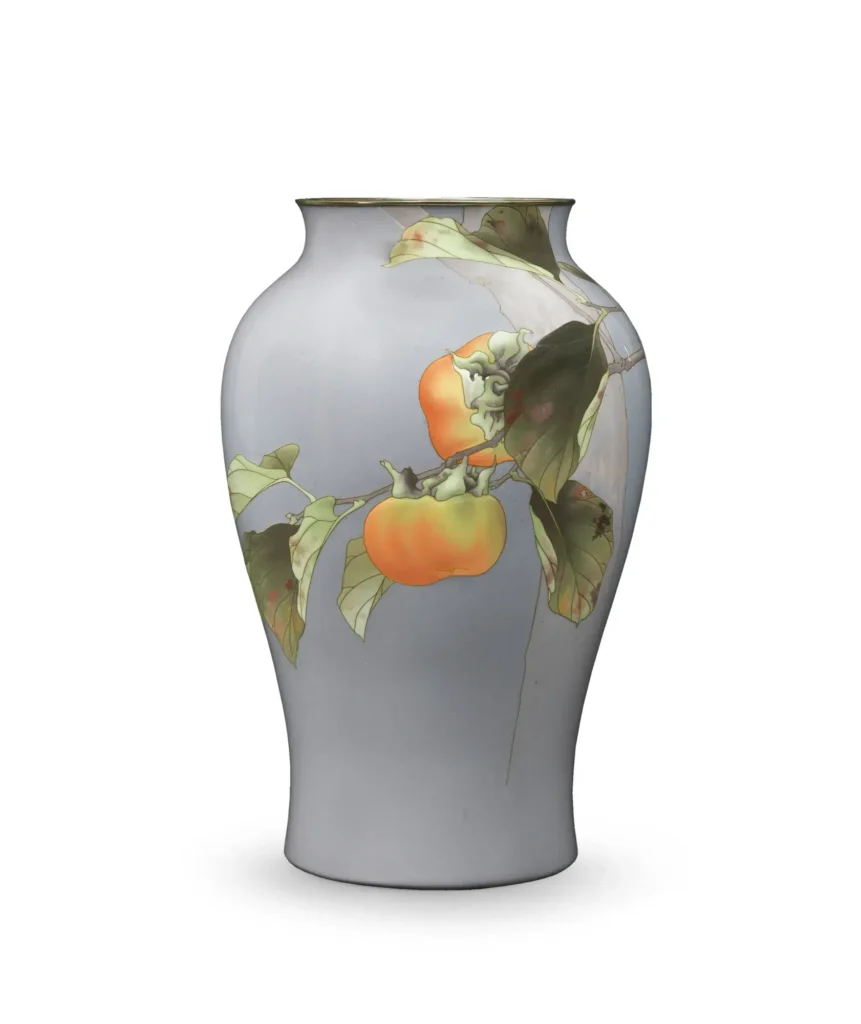
How the works were made, in the words of the sources. Kanji and romanisation are given only where a source supplies them.
Cloisonné
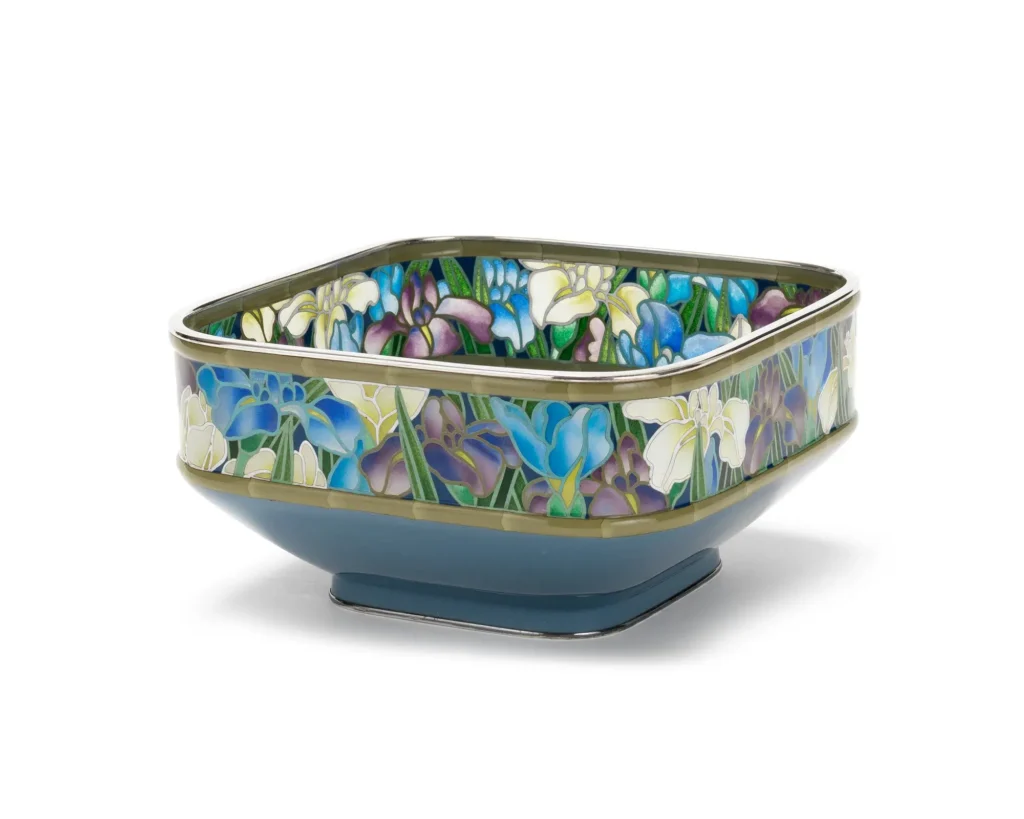
Wired cloisonné
有線七宝 · yūsen shippō
Enamel laid into cells formed by metal wires fixed to a metal body, then fired and polished. Owari cloisonné is known for silver-wire yūsen work, and Japanese Wikipedia traces the Owari revival to Kaji Tsunekichi in the Tenpō era (1830–44).
The wires are removed before the final firing, so the enamels meet without outlines and can blend in soft gradations. Japanese Wikipedia credits Namikawa Sōsuke with the invention in 1879; the English article notes Gottfried Wagener’s part.
Enamel is fired in wire cells on a copper body, which is then dissolved with acid while the enamel is protected by lacquer, leaving translucent enamel that lets light through. It came to Japan after Ando Jubei bought a French example at Paris in 1900, which Kawade analysed.
Shibata Zeshin devised a method of painting in lacquer on paper sized with dōsa (alum and animal glue) so that scrolls could be rolled without flaking.
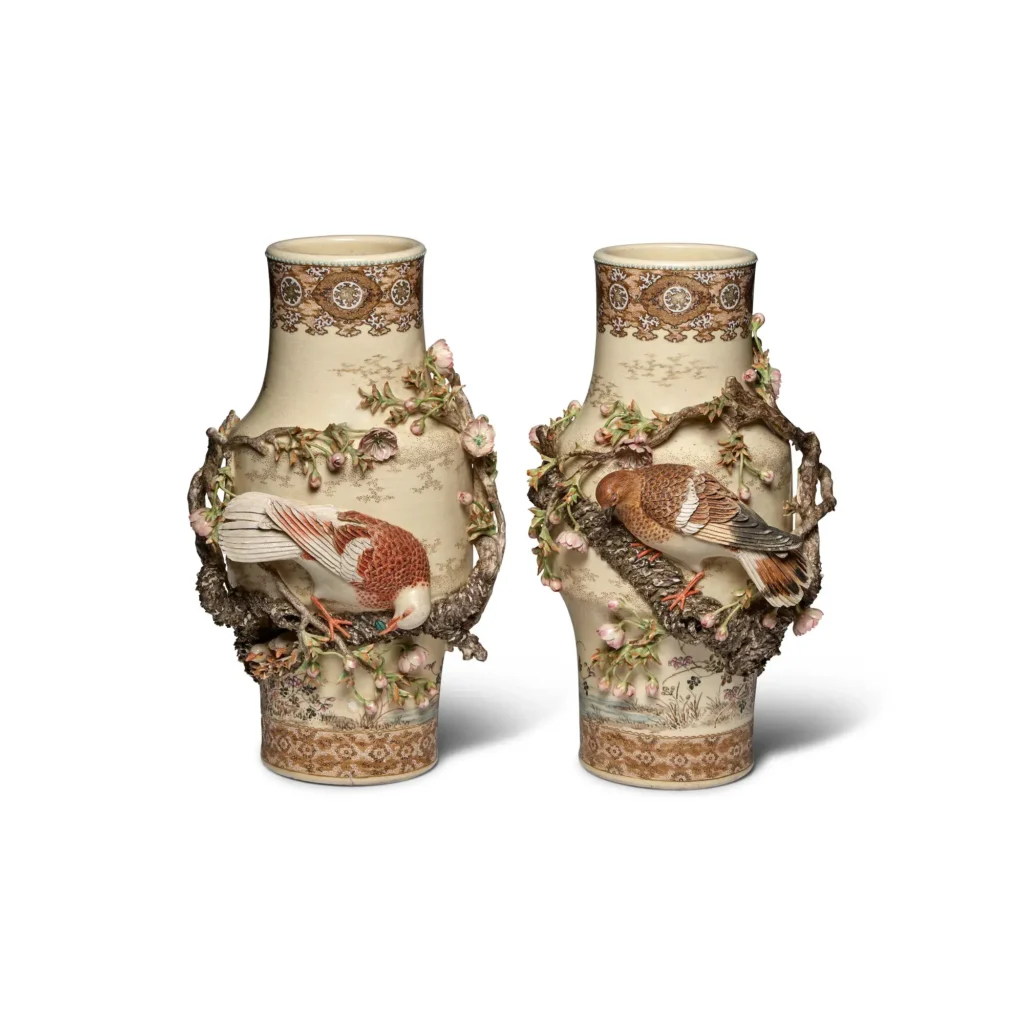
Modelled birds, animals, crabs and plants applied in very high relief to ceramic vessels: the distinctive feature of Makuzu Kōzan’s early Yokohama work.
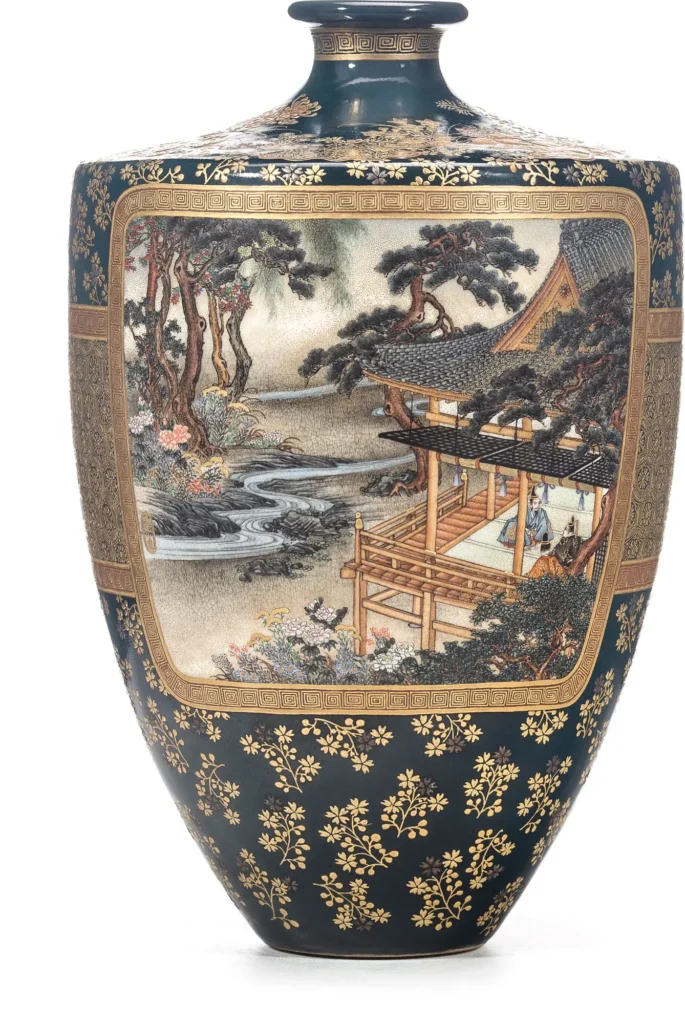
Gold added to polychrome overglaze decoration. Japanese Wikipedia describes Kinkōzan making iro-e kinrande in the Satsuma manner and refining it for export as Kyo-Satsuma.
Yabu Meizan’s designs were engraved on copper plates and printed on paper, and the prints were used to transfer the underdrawing onto each blank before it was painted in enamels and gold. (Neither kanji nor romanisation is given in our sources.)
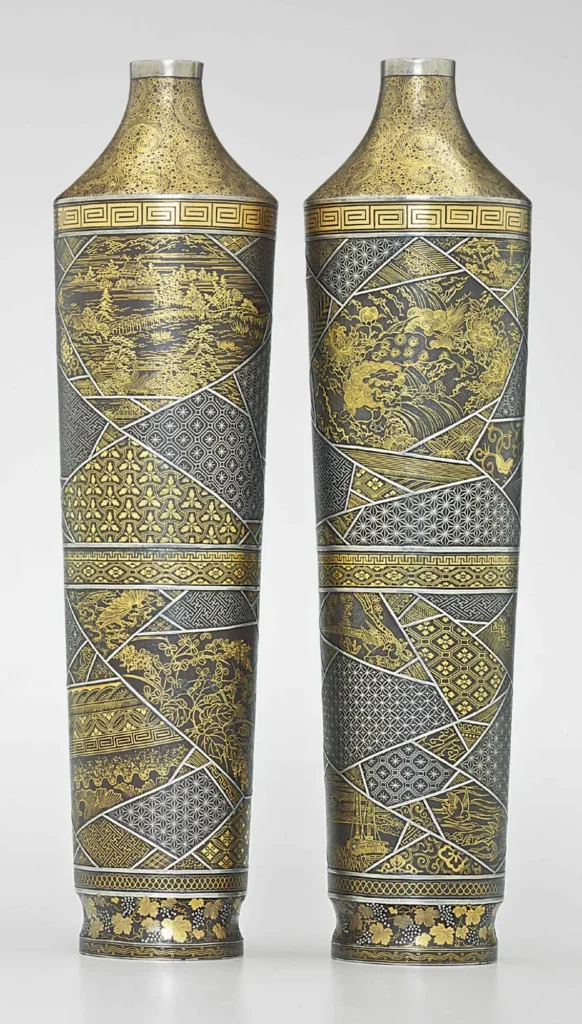
The surface of a hard metal such as iron is incised in several directions to roughen it, and thin sheets of gold or silver are then inlaid. Komai Otojirō’s workshop made it famous abroad as “Komai works”.
A casting method in which a wax model is invested in a mould and melted out before metal is poured. Suzuki Chōkichi trained for five years in wax-model casting.
Descriptions record our research and opinion as of 20 October 2026. Works are offered as described. Please see our Terms of Sale.
About the examples
Each example above is an object whose auction catalogue names the technique; the quoted words are the house’s. Lacquer painting on paper, sprinkled-picture lacquer, copperplate-transfer underdrawing and lost-wax casting have no example yet, because no lot in our database is catalogued in those terms. We would rather leave a gap than illustrate a technique with an object not documented as using it.