Knowledge · Provenance
Chain of ownership, and the law
Provenance
We research and publish provenance for every work: prior collections, dealers, exhibitions, publications and auction appearances, each with a citation. We prefer works traceable to their first owners in the Meiji era. Original boxes (tomobako) are examined for inscriptions, seals and later additions, and recorded as published. Where provenance is unknown, we say so.
Due diligence
We check stolen-art registers before acquisition and keep documentation of lawful export. Identity checks are applied to high-value transactions under anti-money-laundering rules.
Ivory, rhinoceros horn and protected materials
Many Meiji works combine metal, lacquer or wood with ivory. The law differs by place, and we do not offer elephant ivory where the law prohibits its sale. Works containing protected materials are identified in their record.
- California, AB 96 (Fish and Game Code § 2022, enacted 2015, operative 1 July 2016) makes it unlawful in California to purchase, sell, offer for sale, possess with intent to sell, or import with intent to sell ivory or rhinoceros horn. “Ivory” is defined broadly: elephant, hippopotamus, mammoth, mastodon, walrus, warthog, whale and narwhal. One narrow exemption covers a bona fide antique at least 100 years old in which the ivory or horn is less than five percent by volume, with documented provenance. Fish and Game Code § 2022 ↗
- United States, federal: since 6 July 2016 the Endangered Species Act 4(d) rule has imposed a near-total ban on commercial trade in African elephant ivory, with exceptions that include qualifying ESA antiques. US Fish & Wildlife Service, Elephant Ivory FAQs ↗
- United Kingdom, Ivory Act 2018 bans dealing in elephant ivory, with narrow exemptions requiring registration or an exemption certificate. GOV.UK guidance ↗
- CITES governs international movement of listed species; permits are checked for every international shipment. CITES ↗
A summary for orientation, not legal advice. Our full policy on protected materials is in preparation.
How provenance reads in practice
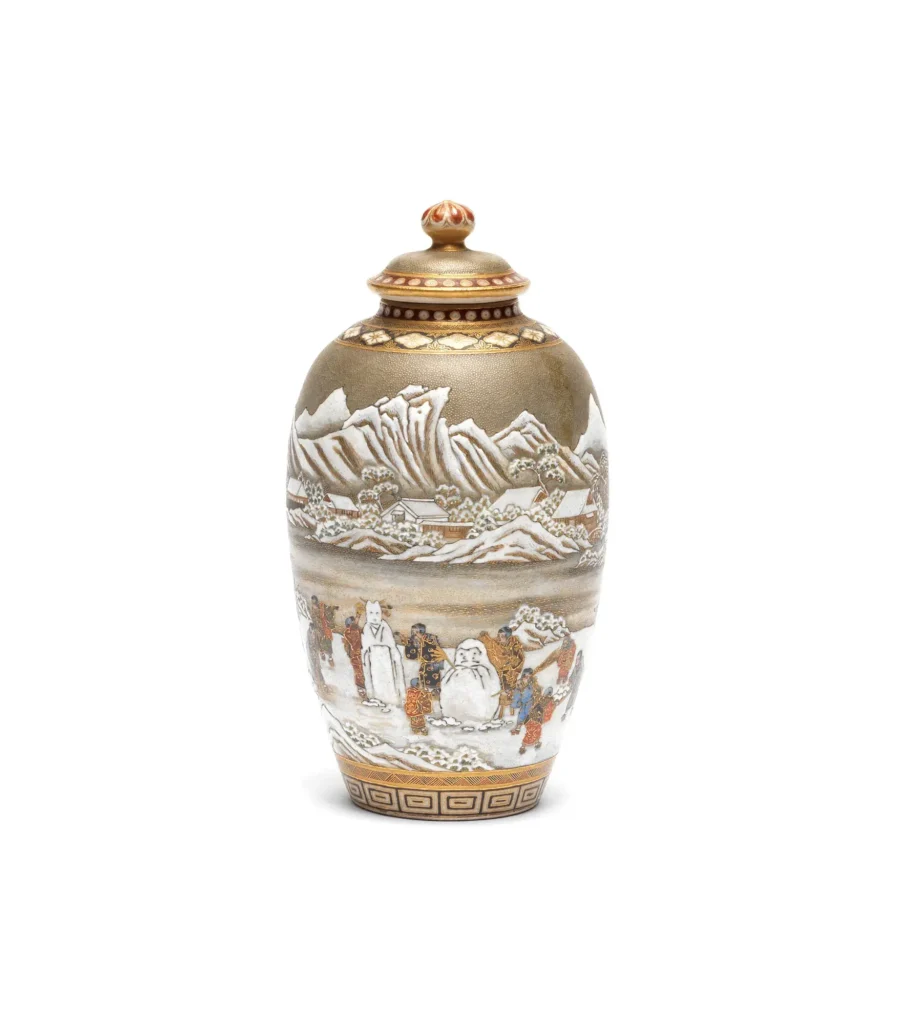
A named early collection. A small Yabu Meizan jar sold in 2014 had descended from Michael Tomkinson, who listed it in his catalogue of 1898. His collection was sold at Glendining’s in 1921–22, and the entry was reproduced in 1995. That chain lets a reader check the object against a description written in the maker’s lifetime.1
“By repute”. A Kōzan vase sold in 2017 was said to have come from Ross Hamilton, Pimlico Road, “1978 or 1979, by repute”. The house’s own qualifier tells the reader that this link is reported, not documented.2
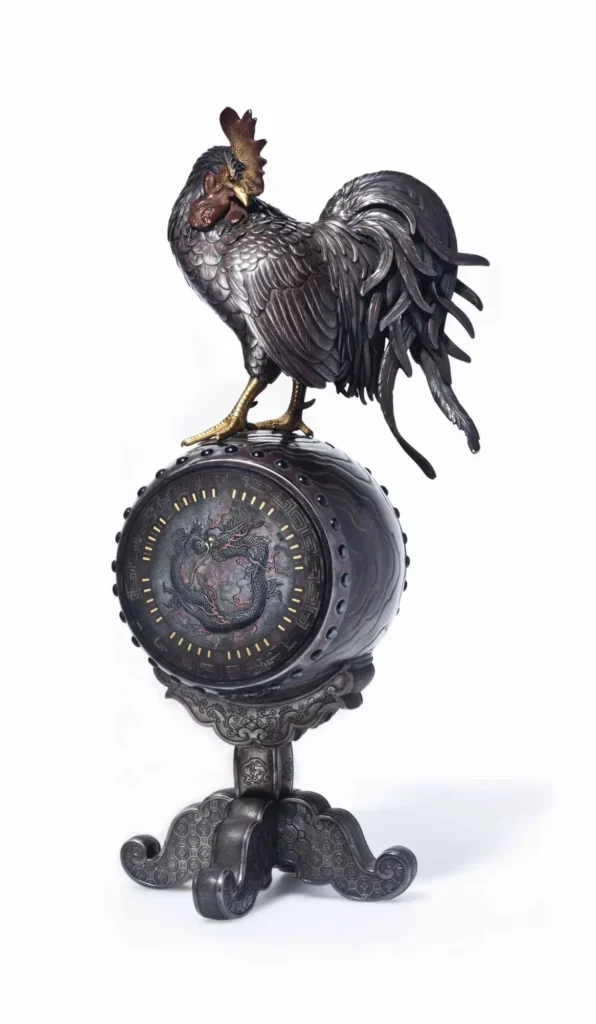
Boxes and certificates. The Shōami Katsuyoshi incense burner sold in 2016 came with a double wood box inscribed and certified by Satō Kanzan in August 1959. A box inscription is part of an object’s history, but it records the opinion of whoever wrote it and when.3