Lot description
Property of Various Owners
KOMAI OTOJIRŌ (1842-1917)
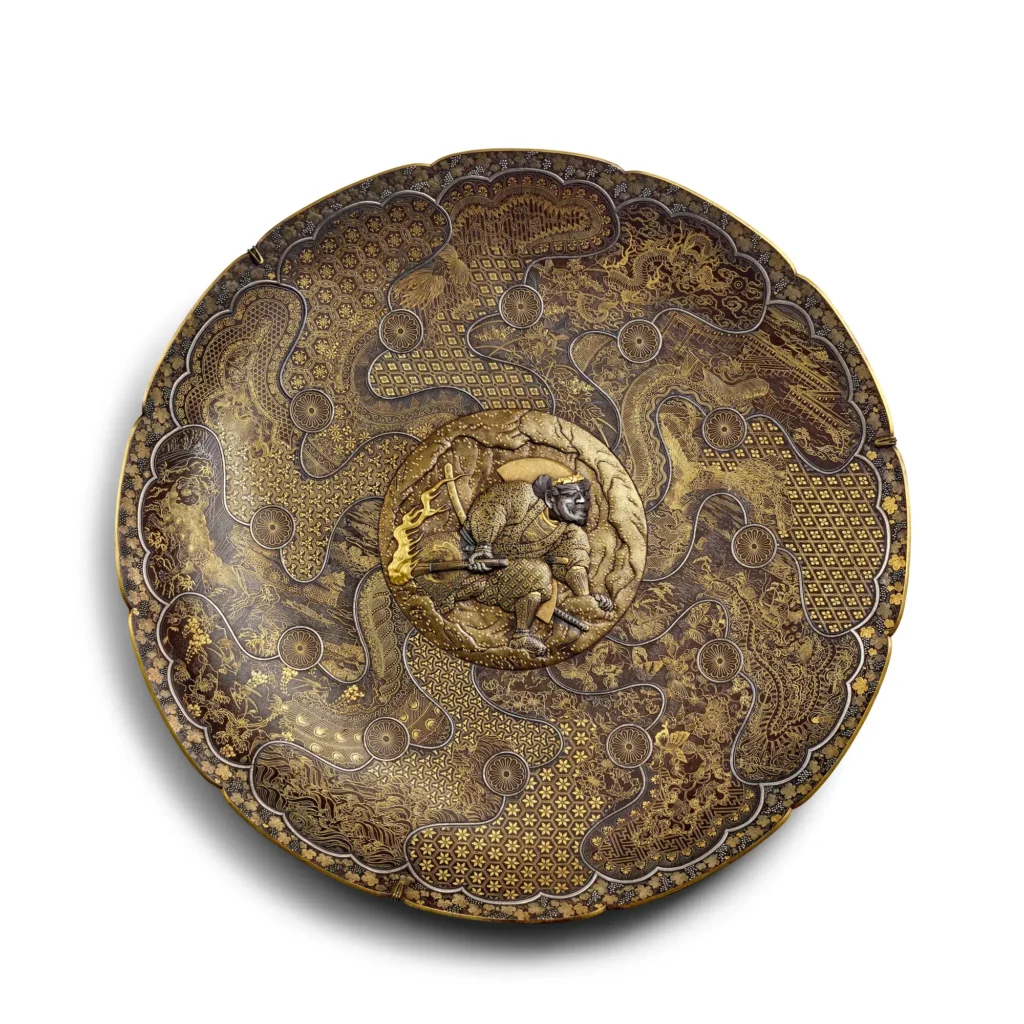
A Large Overlaid-Iron Circular Lobed Charger
Meiji era (1868-1912), 1886 or later
Set on a low ring foot, with nunome zōgan (hammered overlay) of gold and silver and chiseling in high relief with a central circular panel depicting Nitta no Shirō Tadatsune entering a cave with a torch, the surrounding area decorated with undulating panels of geometric patterns, butterflies, birds and flowers, landscapes, and dragons, punctuated by chrysanthemum roundels, and shishi (mythical Chinese lions) within silver edging in low relief, the rim with fruiting grape vines, signed in a rectangular reserve Kyōto no jū Komai sei
17 1/2in (44.5cm) diameterFootnotes
Kyoto metalworking entrepreneur Komai Otojirō drew the imagery for his more ambitious creations from a range of sources including Katsushika Hokusai’s Manga series or, as here, more contemporary woodblock designs. Here, the central roundel is somewhat loosely based on an 1886 print by Tsukioka Yoshitoshi (1839-1892) depicting the 12th-century warrior Nitta Shirō Tadatsune discovering a mysterious cave on Mount Fuji. His companions were afraid to enter, but the fearless Nitta seized a torch, entered the darkness, and was greeted by a deity (see ccdl.claremont.edu/digital/collection/cyw/id/360).
Quoted from the lot page, © Bonhams. Bonhams, Fine Japanese & Korean Art, 2026-09-16, lot 972 ↗
Public historical auction result, cited to the auction house’s own lot page. It records what one object made on one day. It is not a valuation of any work, and nothing here is offered for sale.