I · Identification & Maker
Maker: Shibata Zeshin (1807–1891), LACQUER · 柴田是真
Date / period: 1883
Collection / last record: Bonhams London, Misumi Coll. I, 5 Nov 2014 lot 14 (CONFIRMED); resold Bonhams 7 Nov 2019 lot 14 £375,062.50: £842,500: world auction record for the artist and for lacquer (Bonhams)
II · Technical Masterwork Criteria
Roiro ground; silver takamaki-e snow; tetsusabi-nuri walls; togidashi maki-e; gold hirame. Apparently the only Zeshin panel with human figures (Bonhams)
Teishitsu Gigeiin: Teishitsu Gigeiin 2 Oct 1890 (en.wikipedia.org · Imperial Household Artist ↗)
Exposition / provenance: Exh./publ.: Shinjōji 1926; TNM 2004 cat. I-99; Nezu 2012 cat. 53
III · Iconography & Cultural Meaning (interpretive)
pine: matsu, longevity, winter steadfastness; snow: winter, purity; cherry: sakura, spring, transience (mono no aware); horse: uma, vigor; hachi no ki: Noh play: loyalty and self-sacrifice
Philosophical context (INTERPRETIVE, except the sourced Haitorei fact). The 1876 Haitorei decree banned samurai from wearing swords in public, depriving sword-fitting artisans of their market, so many turned to export art (sourced: antiquesandthearts.com · samurai to the imperial court japanese metalwork ↗). Meiji export pieces often favour dense, virtuosic surface (horror vacui for Western taste), in tension with native ideals of yugen (subtle depth), wabi-sabi (imperfect, transient beauty) and shibui (restrained elegance). The finest makers (Meizan's negative space, Yasuyuki's monochrome grounds, Seifu's celadons) reconcile the two.
IV · Marks 落款 & box
Mark / seal as published: Gold maki-e: 行年七十七 古満是真製 (Made by Koma Zeshin, aged 77)
Tomobako: TOMOBAKO: outside 蒔絵 雪中佐野之図 額面; inside 古満是真製 with seal 七十七叟; with a 14 Apr 1926 auction slip (3,750 yen). The model verification set.
Sources: bonhams.com · sale 22532, lot 14 ↗ · bonhams.com · sale 25924, lot 14 ↗
Assessment
See how we score
| Maker stature | 2.5 / 2.5 |
| Recognition (museum / designation / price) | 3 / 3 |
| Exhibition | 1 / 1 |
| Technique (cited) | 1.5 / 1.5 |
| Provenance | 1 / 1 |
| Condition, scale & documentation | 1 / 1 |
| Total | 10 / 10 |
Reasoning: Gigeiin; £842,500 world record for the artist and for lacquer; exh. TNM 2004 and Nezu 2012; 1926 provenance with box. How we score.
Maker context
Shibata Zeshin was born in Edo on 15 March 1807. His father and grandfather were shrine carpenters and wood carvers, and his father had also studied ukiyo-e painting under Katsukawa Shunshō. At eleven Zeshin was apprenticed to the lacquerer Koma Kansai II. He was then sent to study painting with Suzuki Nanrei of the Shijō school, from whom he received the name Zeshin.
When Koma Kansai died in 1835, Zeshin inherited the Koma workshop. In the 1830s and 1840s laws limited the use of gold and silver. He responded with other materials, using bronze powder in lacquer to imitate iron. He devised a way of painting in lacquer on paper sized with dōsa, so that urushi-e scrolls could be rolled without flaking. He also revived seigaiha, a wave pattern drawn with a comb through lacquer that is still setting.1
Summarised from our maker page, where every fact is footnoted: Shibata Zeshin 柴田是真.
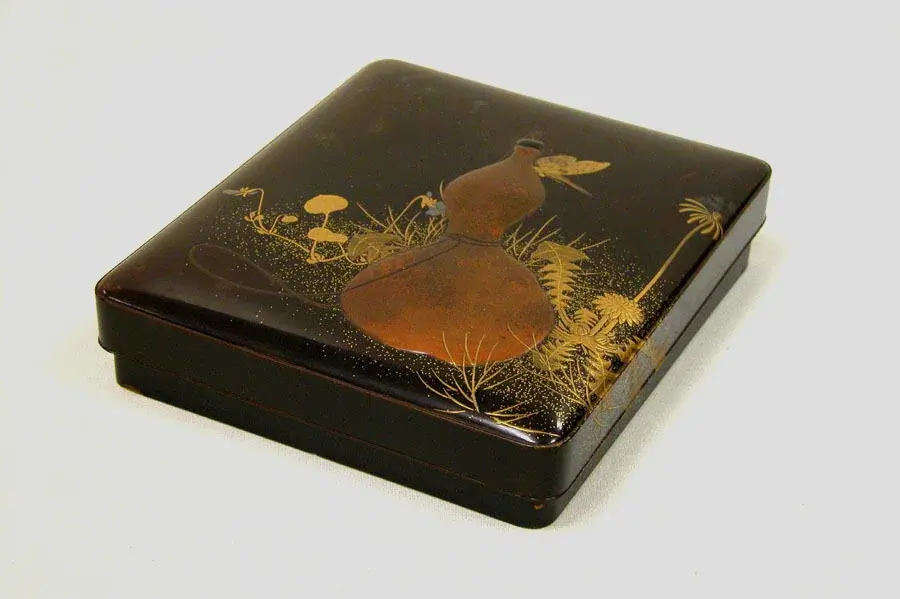
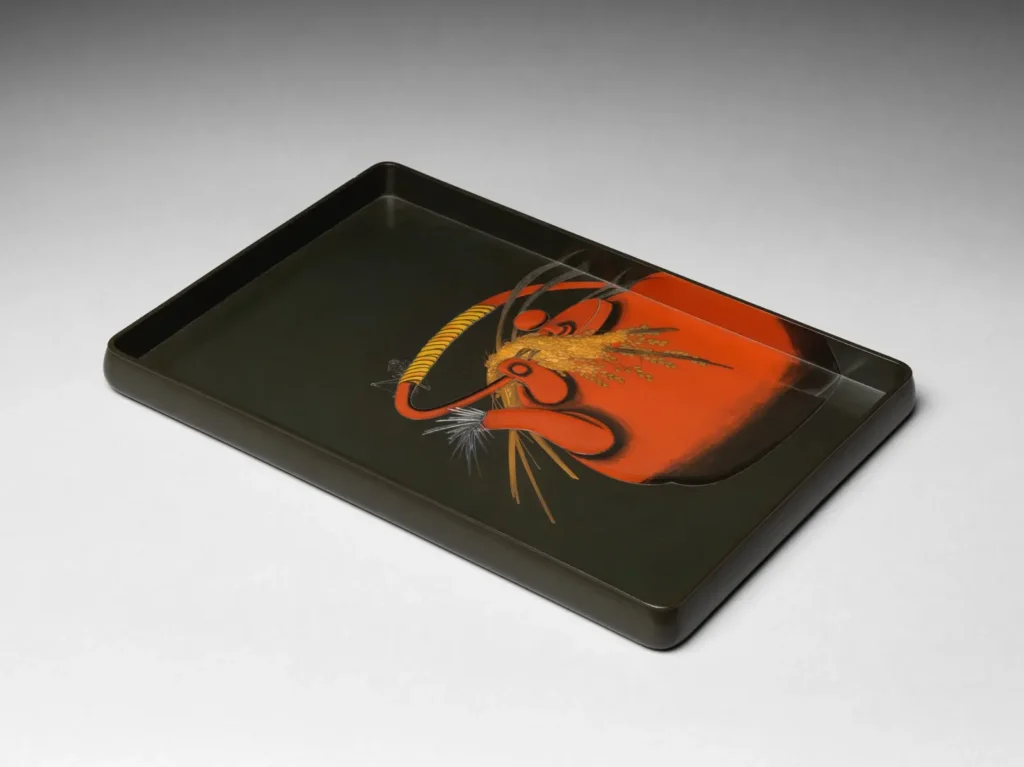
This record has no openly licensed photograph of its own. The image above shows a different work by the same maker and is labelled as such.
Notes to “Maker context”
- Shibata Zeshin, English Wikipedia ↗
Related records
Descriptions record our research and opinion as of 20 October 2026. Works are offered as described. Please see our Terms of Sale.