I · Identification & Maker
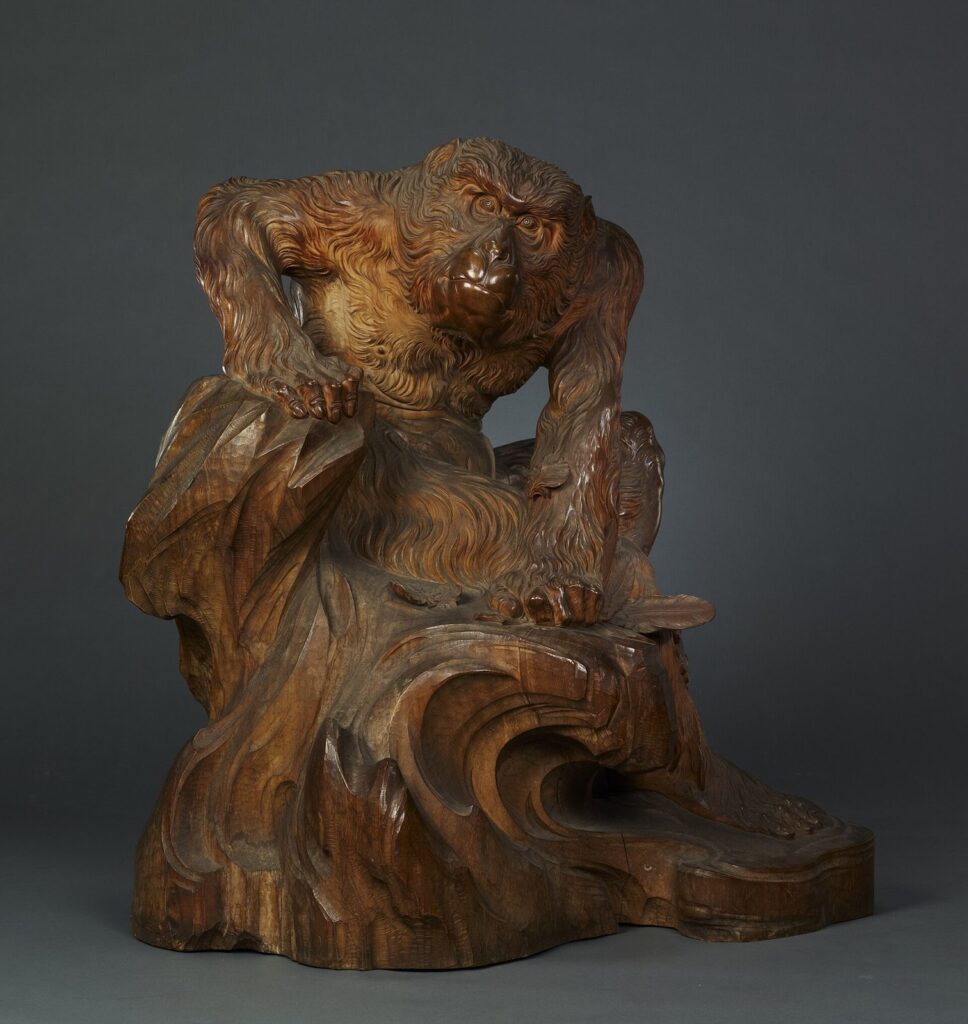
Maker: Unno Shomin (1844–1915) · kanji not yet sourced
Date / period: made for the Paris Exposition 1900
Collection / last record: Museum of the Imperial Collections, Sannomaru Shozokan; Important Cultural Property (designated Aug 2024, per Yomiuri): museum · Important Cultural Property
II · Technical Masterwork Criteria
Chased metal (chokin) standing figure (Yomiuri). Medium details, dimensions and the official designation record are not yet captured ⚠
Teishitsu Gigeiin: Teishitsu Gigeiin 30 Jun 1896 (en.wikipedia.org · Imperial Household Artist ↗)
Exposition / provenance: Paris Exposition 1900, made at the request of the Imperial Household Ministry
III · Iconography & Cultural Meaning (interpretive)
warrior: samurai nostalgia for the export market after the Haitorei
Philosophical context (INTERPRETIVE, except the sourced Haitorei fact). The 1876 Haitorei decree banned samurai from wearing swords in public, depriving sword-fitting artisans of their market, so many turned to export art (sourced: antiquesandthearts.com · samurai to the imperial court japanese metalwork ↗). Meiji export pieces often favour dense, virtuosic surface (horror vacui for Western taste), in tension with native ideals of yugen (subtle depth), wabi-sabi (imperfect, transient beauty) and shibui (restrained elegance). The finest makers (Meizan's negative space, Yasuyuki's monochrome grounds, Seifu's celadons) reconcile the two.
IV · Marks 落款 & box
Mark / seal as published: Not captured
Tomobako: Not captured
Sources: tsumugu.yomiuri.co.jp · banpaku cultural assets paris 2505 ↗
Assessment
See how we score
| Maker stature | 2.5 / 2.5 |
| Recognition (museum / designation / price) | 3 / 3 |
| Exhibition | 1 / 1 |
| Technique (cited) | 1 / 1.5 |
| Provenance | 1 / 1 |
| Condition, scale & documentation | 0.5 / 1 |
| Total | 9 / 10 |
Reasoning: Gigeiin; ICP (Aug 2024 per Yomiuri); Paris 1900 imperial commission. Dimensions and official record not yet captured ⚠. How we score.
Maker context
Unno Shōmin was born at Mito on 30 June 1844, the fourth son of Den’emon. He learned metal carving from his uncle, the first Unno Moritoshi, and then from Hagiya Katsuhira of the Mito domain. He also studied painting and Chinese texts.
He moved to Tokyo early in the Meiji era and opened his workshop at Komagome Sendagi in 1876. He received honourable mentions at the National Industrial Exhibitions of 1877 and 1881. In 1890 his figure of Ryōōō won a first prize for technical excellence at the third exhibition. That work, now in the Museum of the Imperial Collections, was designated an Important Cultural Property in 2022.1
Summarised from our maker page, where every fact is footnoted: Unno Shōmin 海野勝珉.
Notes to “Maker context”
- 海野勝珉, Japanese Wikipedia ↗
Related records
Descriptions record our research and opinion as of 20 October 2026. Works are offered as described. Please see our Terms of Sale.