The Meiji government promoted Japanese art abroad at a succession of world’s fairs, beginning at Vienna in 1873. [Meiji era]
1873
Vienna
1 May – 31 October 1873 · Vienna, Austria-Hungary
Japan's exhibition was the product of years of preparation; officials including Sano Tsunetami hoped to raise the standing of Japanese manufactures and boost exports. After the fair the government began holding national industrial exhibitions at Ueno (1877). The Kiryū Kōshō Kaisha export company grew out of the Vienna delegation.
10 May – 10 November 1876 · Philadelphia, United States
The first official world's fair in the United States. The Japan exhibit included a pavilion, house and garden; the Japanese government created a Centennial Office to secure space for some 30,000 items. Makuzu Kōzan showed a wide range of ceramics including high-relief vessels.
Suzuki Chōkichi's monumental bronze incense burner was displayed on the Kiryū Kōshō Kaisha stand in the Japanese pavilion; it was later bought by Siegfried Bing and sold to the V&A.
Attracted more than thirty-two million visitors. Makuzu Kōzan won a gold medal for transmutation glazes; Seifū Yohei III a bronze prize; Hayashi Kodenji the first of his international medals; Namikawa Sōsuke an award.
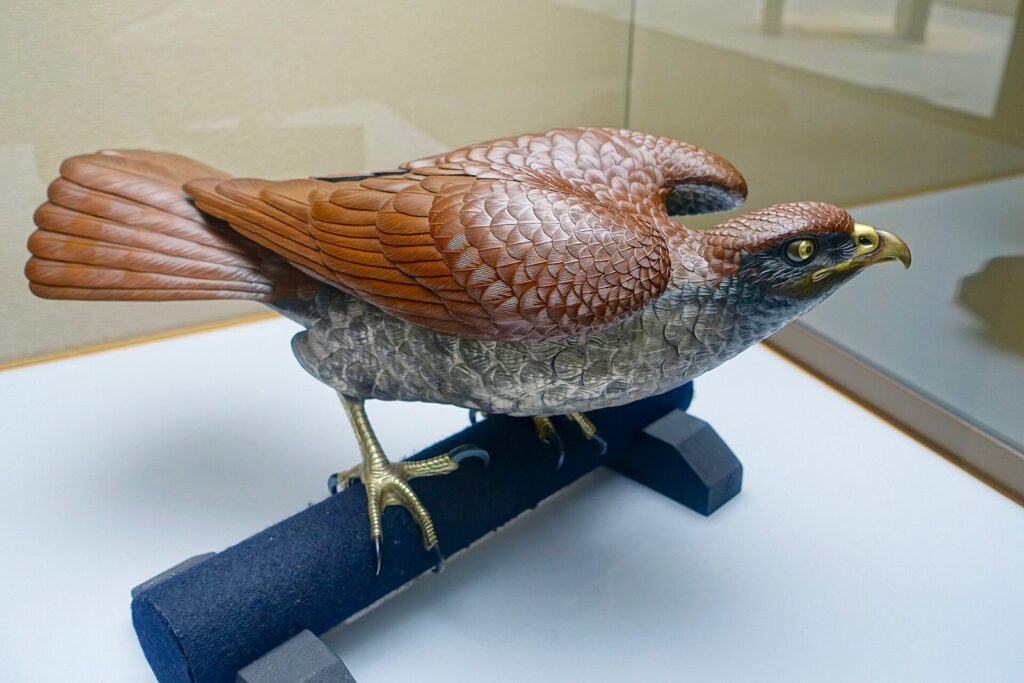
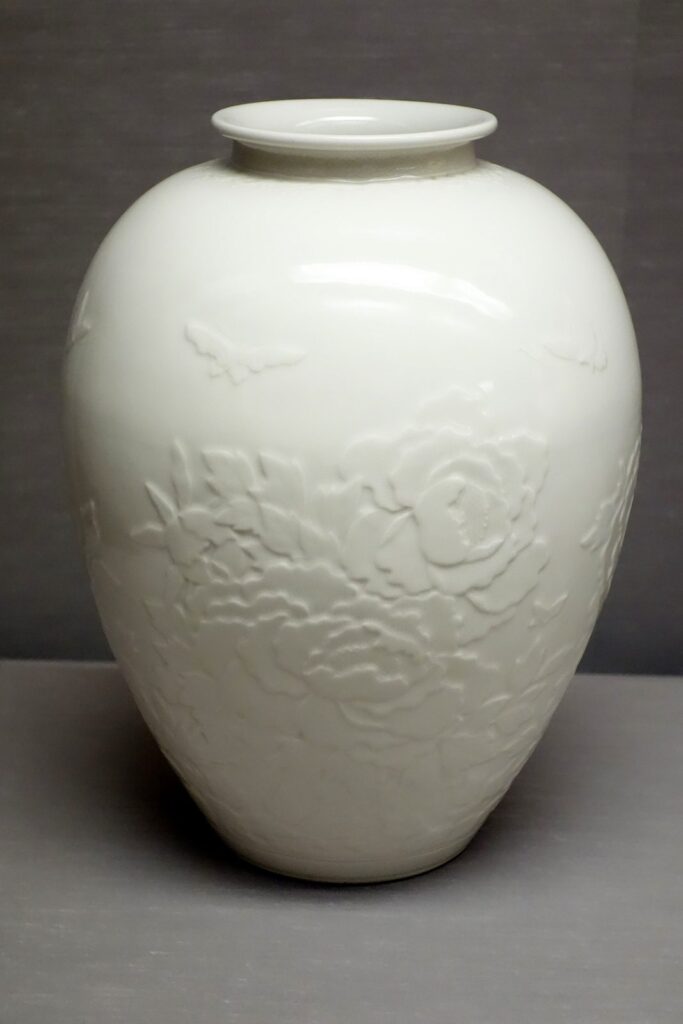
Celebrated the 400th anniversary of Columbus's arrival. Many works now in the Tokyo National Museum were shown here and later given by the Japanese delegate's office, including Takamura Kōun's Old Monkey, Kagawa Katsuhiro's monkeys plaque, Unno Shōmin's Genjōraku plaque, Shōami Katsuyoshi's bulbul plaque, Seifū Yohei III's peony vase and Suzuki Chōkichi's Twelve Hawks.
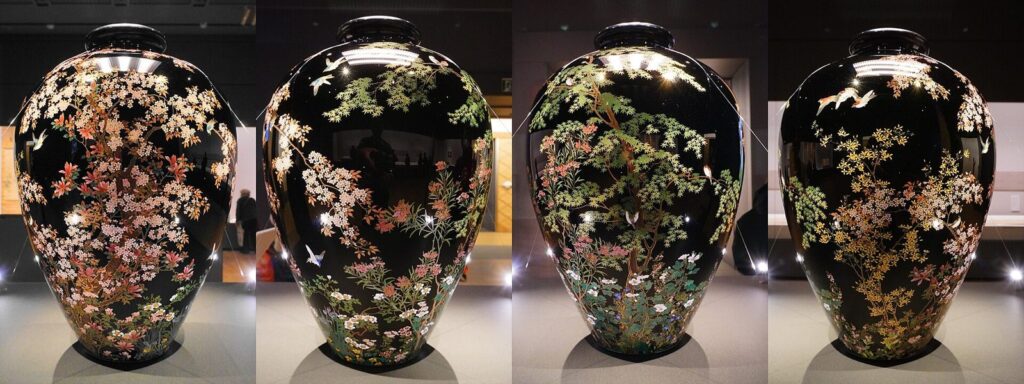
Namikawa Yasuyuki's Four Seasons vase won a gold prize; Makuzu Kōzan was the only Japanese ceramic grand prix winner; Ando Jubei bought the French plique-à-jour enamel that Kawade later analysed.
30 April – 1 December 1904 · St Louis, United States
The Japanese government spent lavishly on its pavilion and garden. Namikawa Sōsuke won a Grand Prize, Namikawa Yasuyuki and Yabu Meizan gold prizes; Meizan was secretary of the Japan Exhibits Association.
14 May – 29 October 1910 · White City, London, United Kingdom
The Japan–British Exhibition was the largest international exposition in which the Empire of Japan had ever taken part, with some 2,271 Japanese exhibitors. Makers represented included Namikawa Sōsuke, Ando Jubei, Kawade Shibatarō, Yabu Meizan and Seifū Yohei III.
At home, five National Industrial Exhibitions (内国勧業博覧会) were held between 1877 and 1903: three in Tokyo and one each in Kyoto and Osaka. [内国勧業博覧会]
Descriptions record our research and opinion as of 20 October 2026. Works are offered as described. Please see our Terms of Sale.
Works documented at the fairs
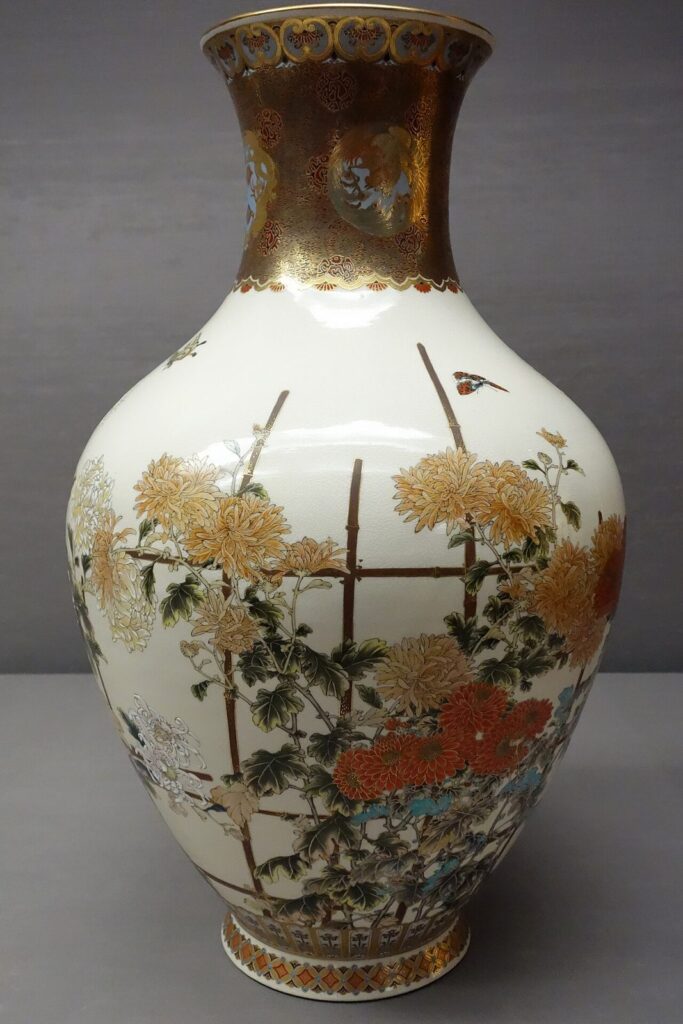
Reference Vase with Birds and Flowers of the Four Seasons, Namikawa Yasuyuki, 1899, 四季花鳥図花瓶, 並河靖之. Gold prize, Paris 1900. CC BY-SA 4.0 (by SLIMHANNYA). Source ↗Reference Twelve Hawks by Suzuki Chokichi, 1893, bronze, lacquer, casting, gilding, and inlay – DSC04872. Shown at Chicago, 1893. CC0 (by Daderot). Source ↗Reference Vase by Seifu Yohei III (1851-1914), 1892 World's Columbian Exposition, butterfly and peony design in relief – Tokyo National Museum – DSC05575. Shown at Chicago, 1893. Public domain (by Daderot ). Source ↗Reference Large Vase by Taizan Yohei IX (1856-1922), 1892 World's Columbian Exposition, bird and flower design in overglaze enamels and gold – Tokyo National Museum – DSC05571. Shown at Chicago, 1893. Public domain. Source ↗
Exposition histories are as given by the holding museums or the image sources linked.